Almost every defining moment of a human life happens inside four walls.
Every culture experiences these moments differently, yet they almost always unfold within a boundary. Architecture has been measured for five thousand years. Perception has not.
Think of your bedroom. Now think of how your mother sees that exact same bedroom.
You see your safe place, your posters, your world.
She sees the mess, the laundry, the kid she's worried about.
Same walls. Same furniture. Two completely different rooms.
The knowledge exists. The field does not.
For a century, three disciplines have circled the same question without ever meeting.
The poetry of space | without data.
The data of space | without culture.
The culture of space | without an instrument.
No unified framework. No instrument capable of holding all three. No site diverse enough to test it. This project supplies all three.
Architecture does not end when
construction finishes.
Architecture begins when someone enters.
Not a room. A condition of containment, anything that passes three tests:
Every space is studied in four stages.
Expectation. Identity. Memory. Fear. Culture. What you carry to the door.
Arrival. The first second. The crossing that changes your state.
Everything that unfolds inside. Conversation. Silence. Waiting. Celebration.
What remains after the body leaves. Memory. The afterlife of the room.
Stages A–C descend from a century of ritual theory. Stage D — architecture persisting after departure, is this project's original contribution.
The same room produces a different reality for every occupant.
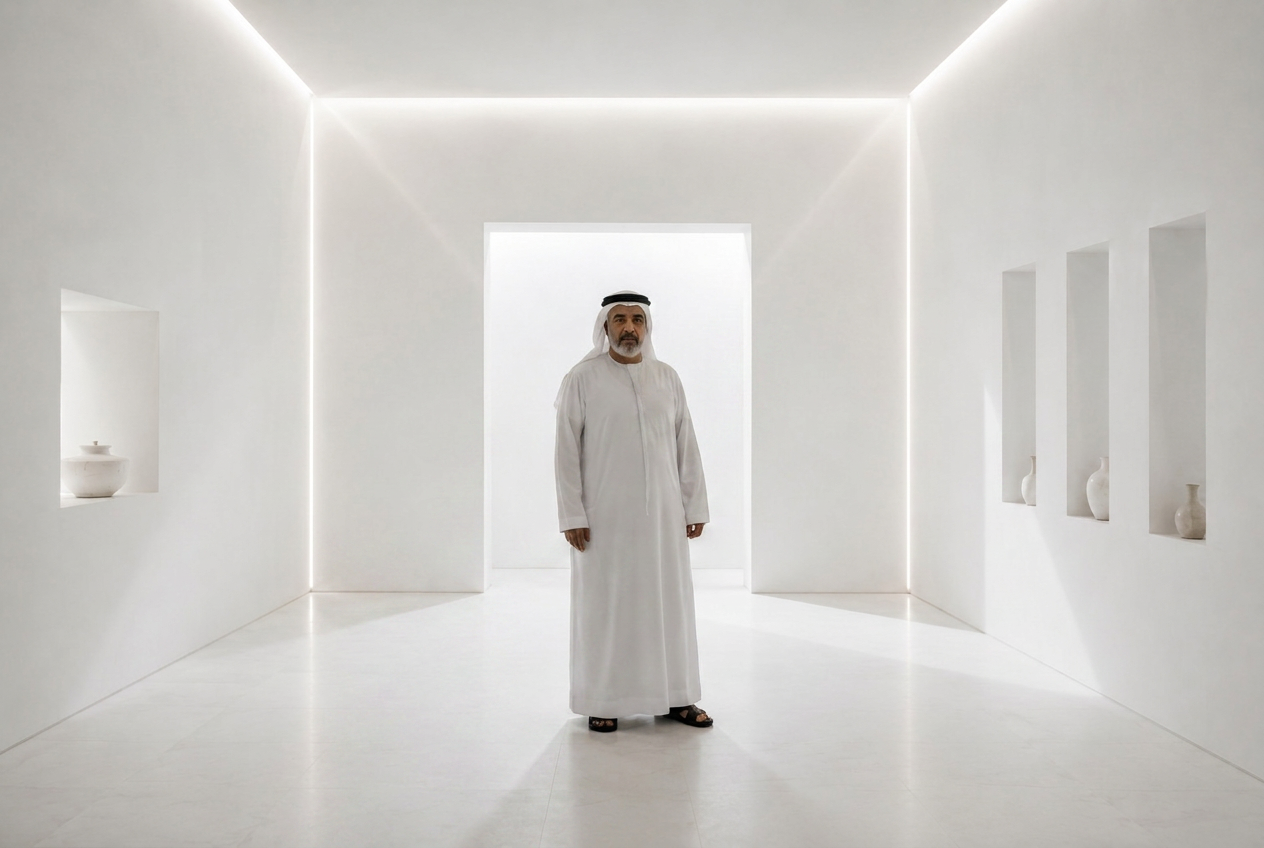
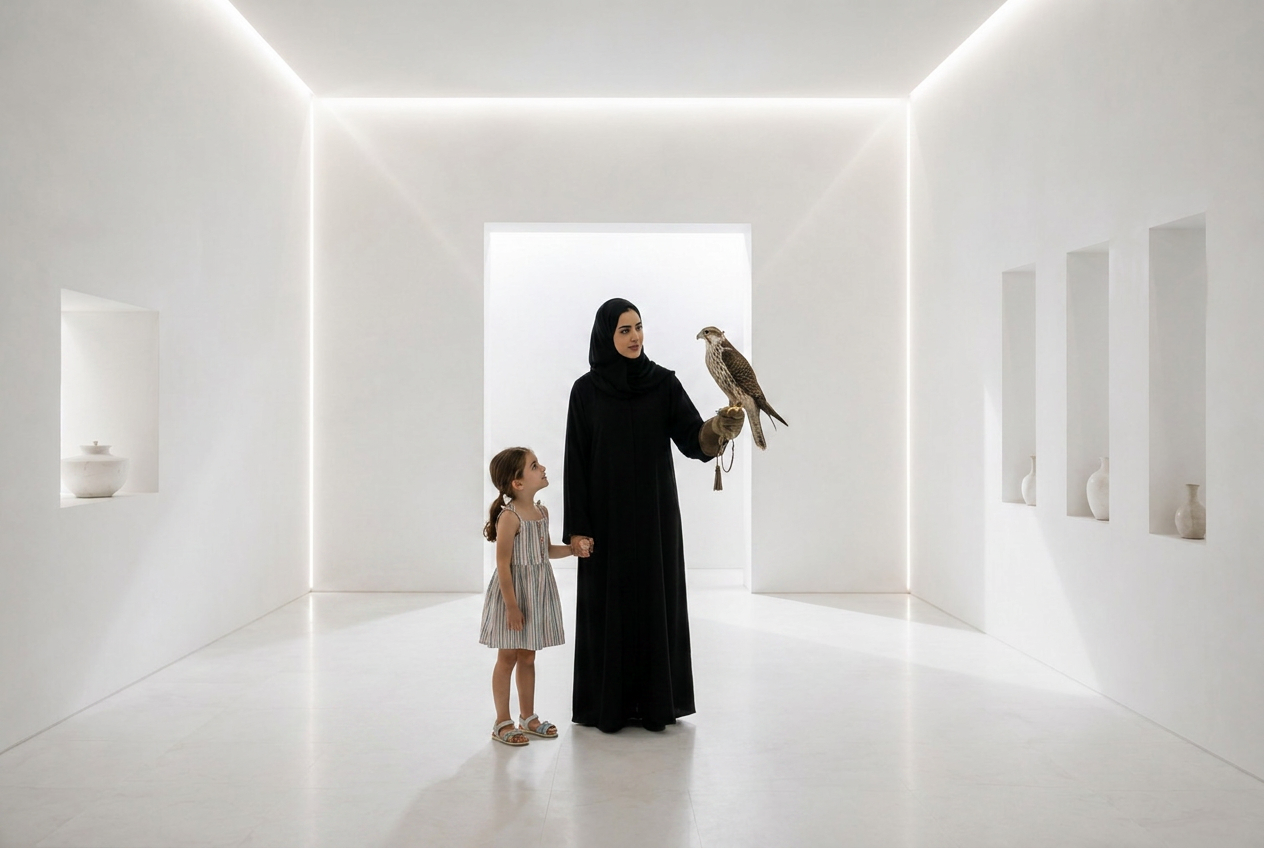
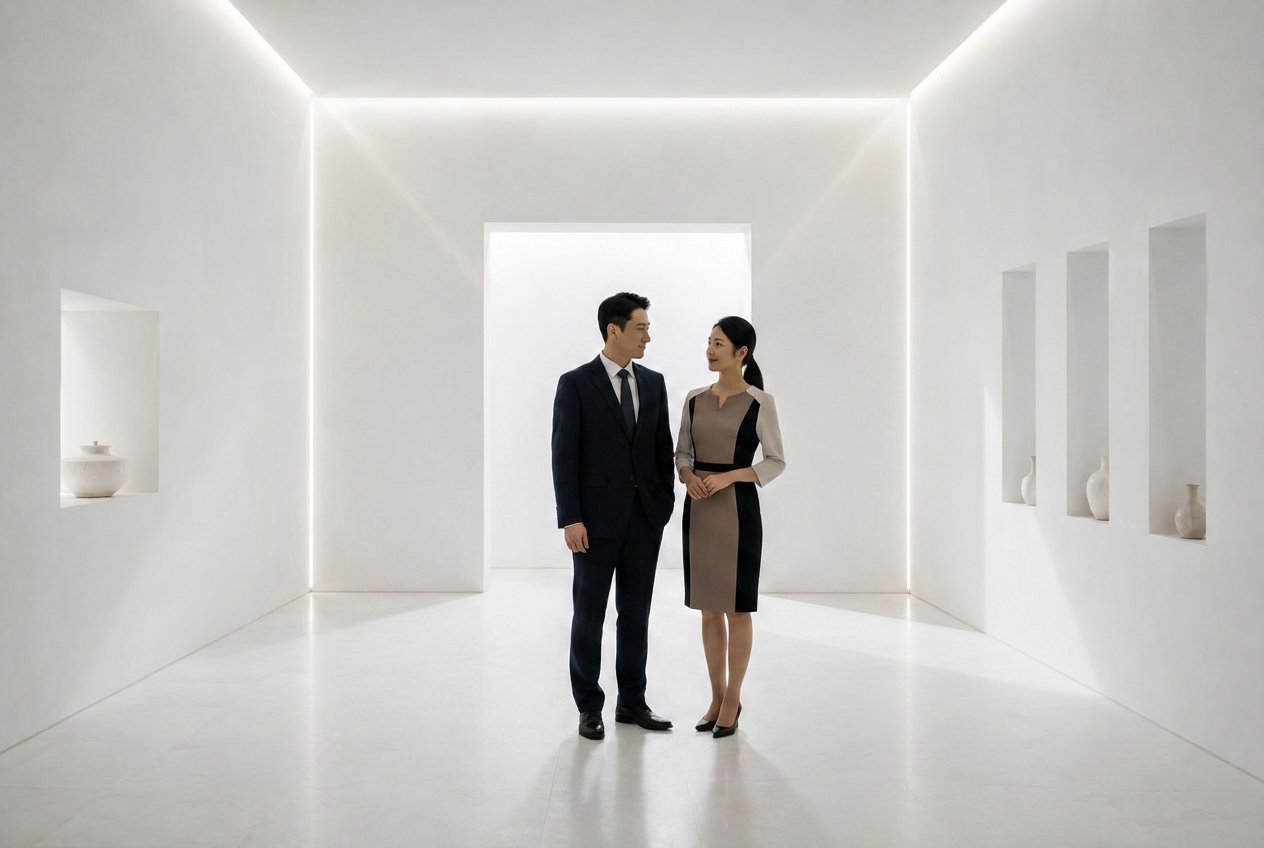
And one axis most frameworks ignore: voluntary vs. imposed occupation. The same walls are a sanctuary or a sentence, depending on who controls them.
AI is not the artist. AI is the instrument.
more than the space itself does?
The UAE is the only place on earth where this question can be tested at full density.
The same apartment building, the same office, the same majlis, the same elevator, occupied daily by people carrying entirely different histories, languages and memories into identical walls.
Not heritage as imagery. Heritage as a living experiment,
a study of coexistence, conducted one room at a time.
The Hundred Rooms
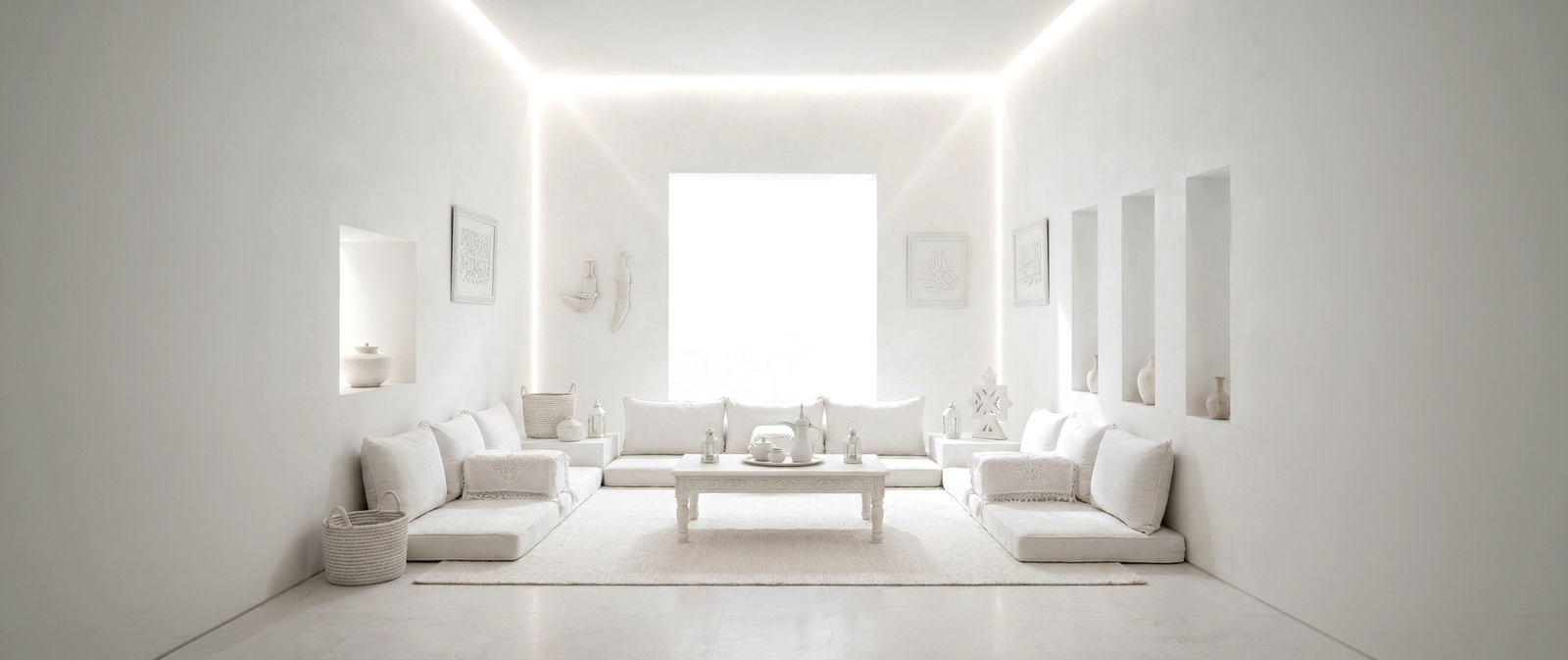
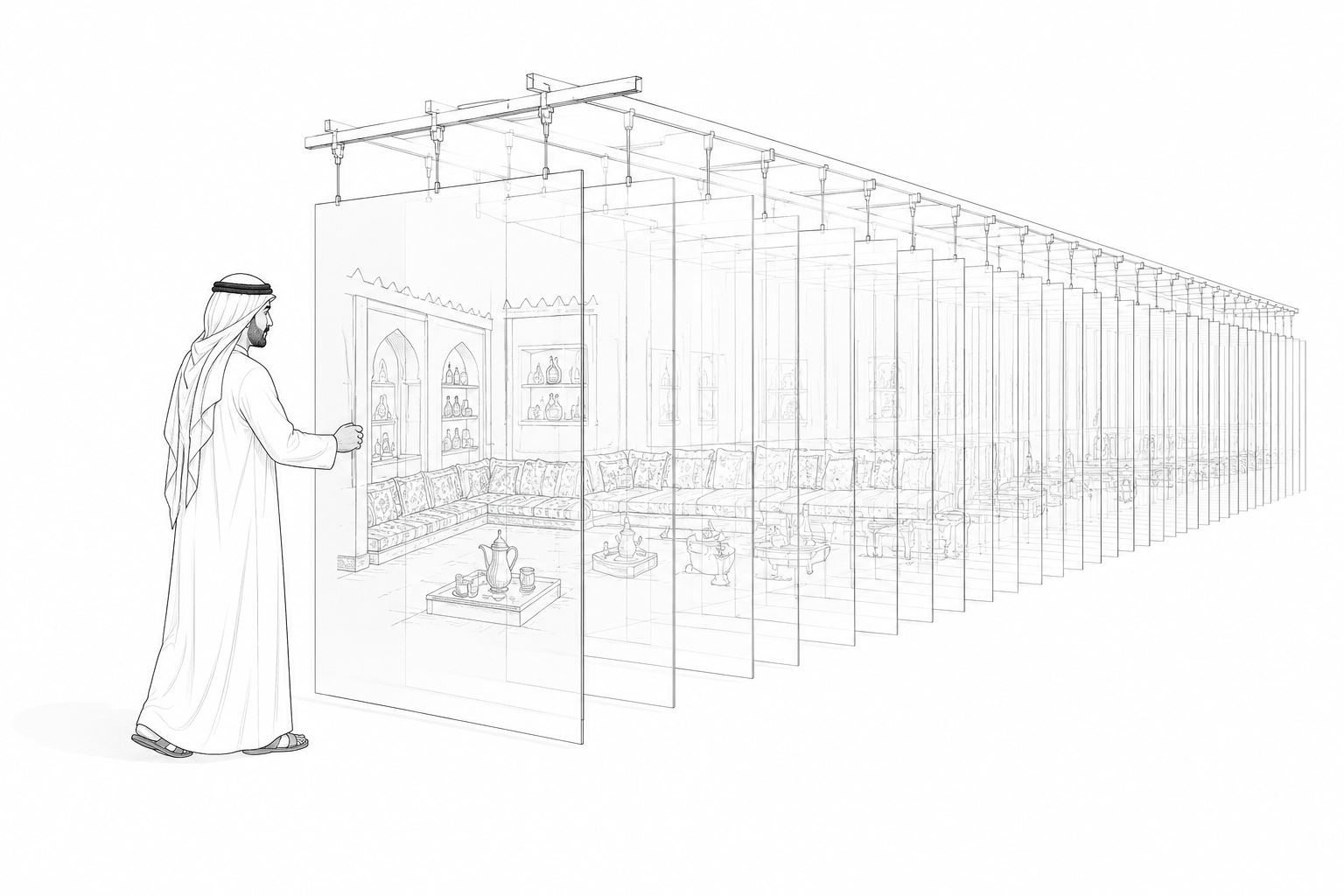
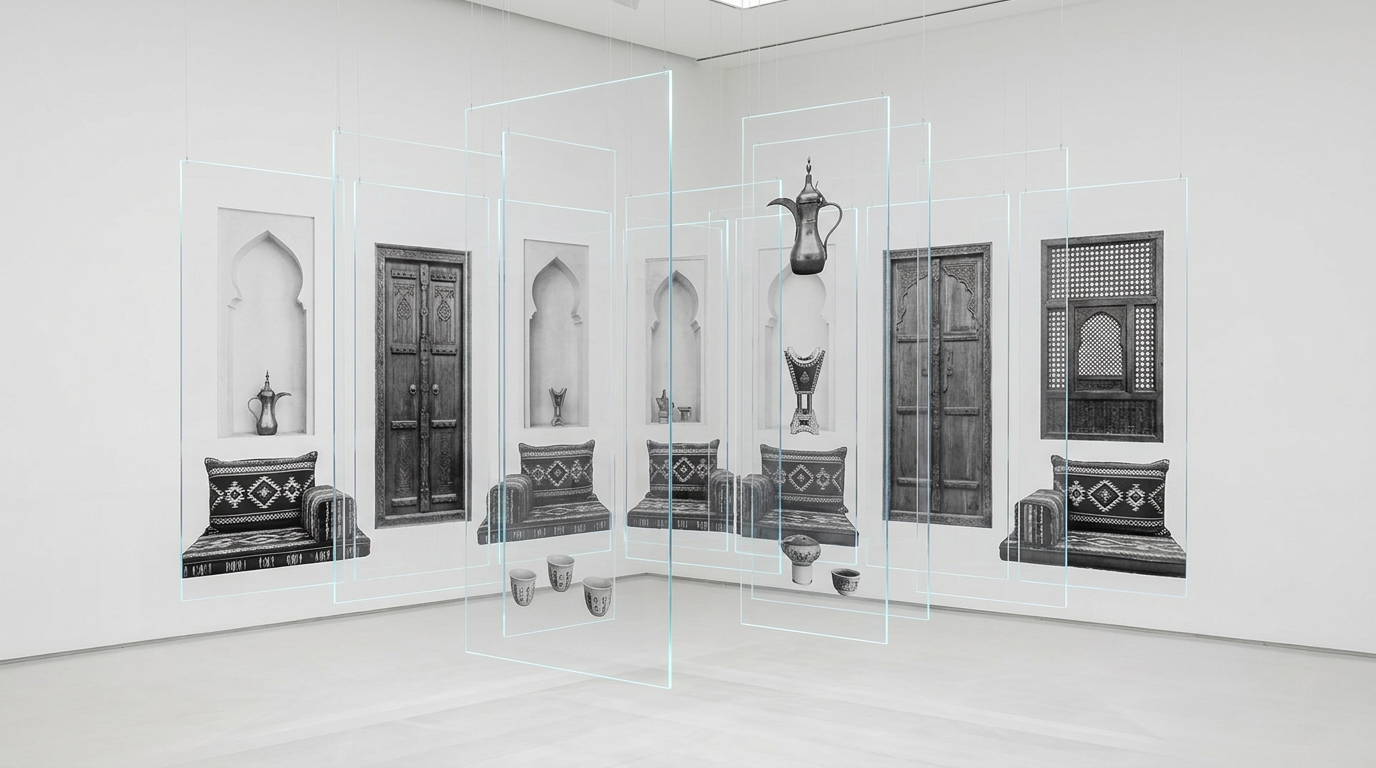
One majlis, the Gulf's oldest social architecture, inscribed by UNESCO as living heritage. One hundred people, one hundred cultural backgrounds, describing it in their own words. Each perception reconstructed by AI from testimony alone, printed on a transparent sheet, and hung in floor-to-ceiling rails, arranged in depth by era.
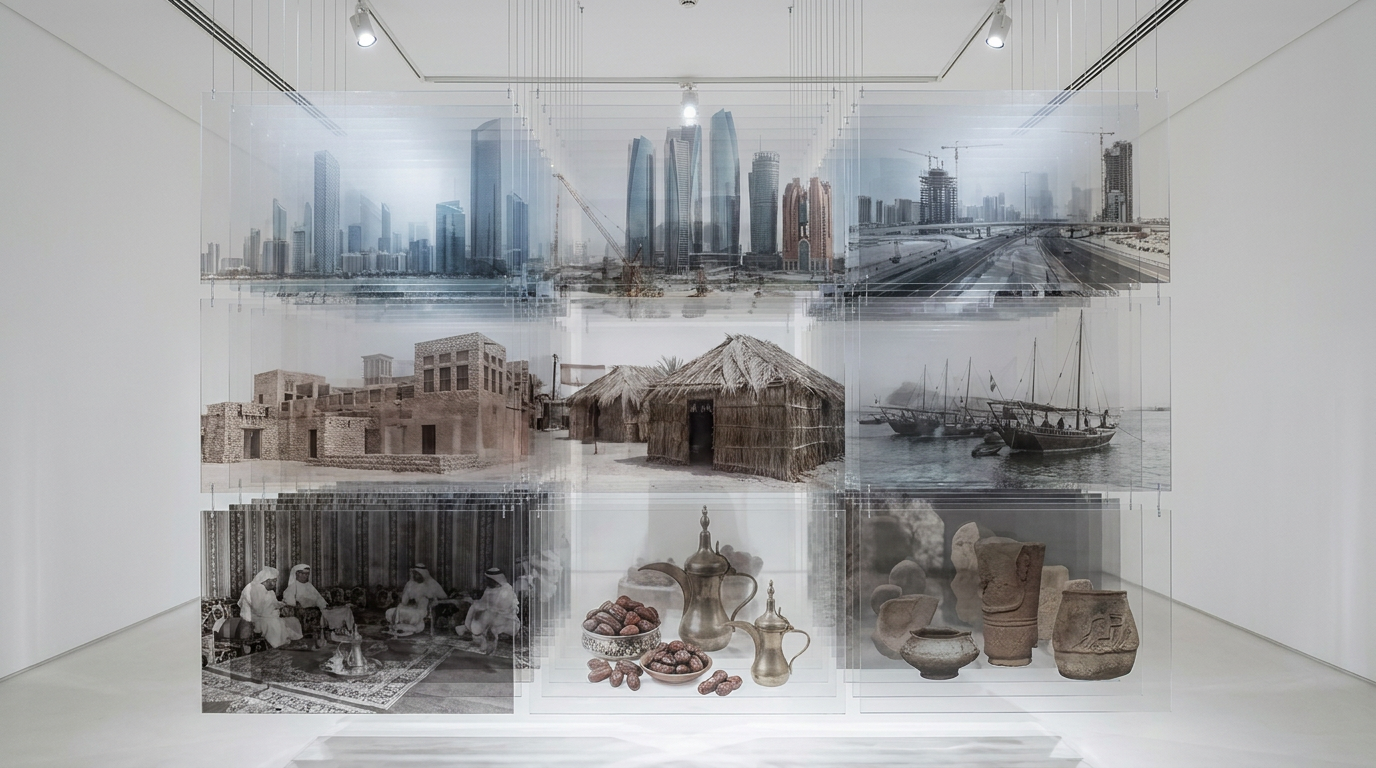
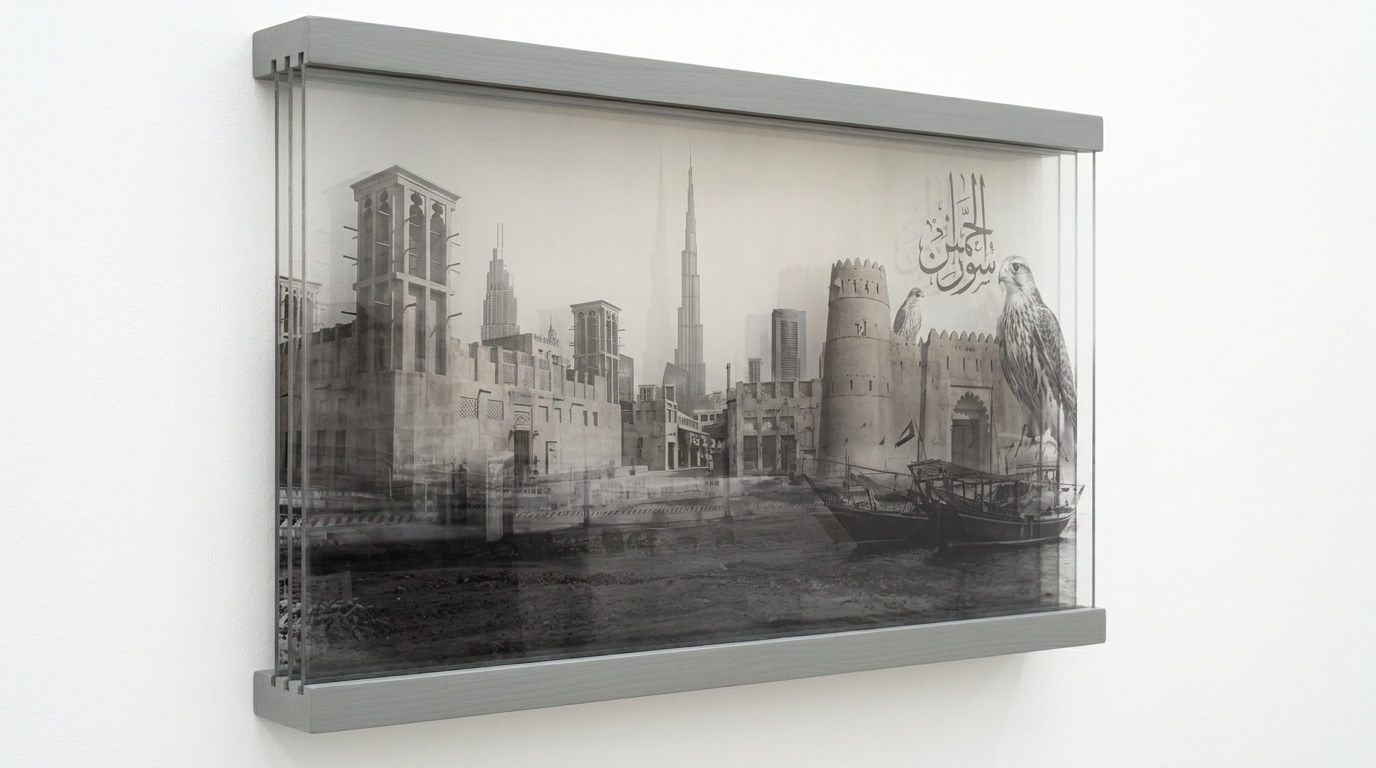
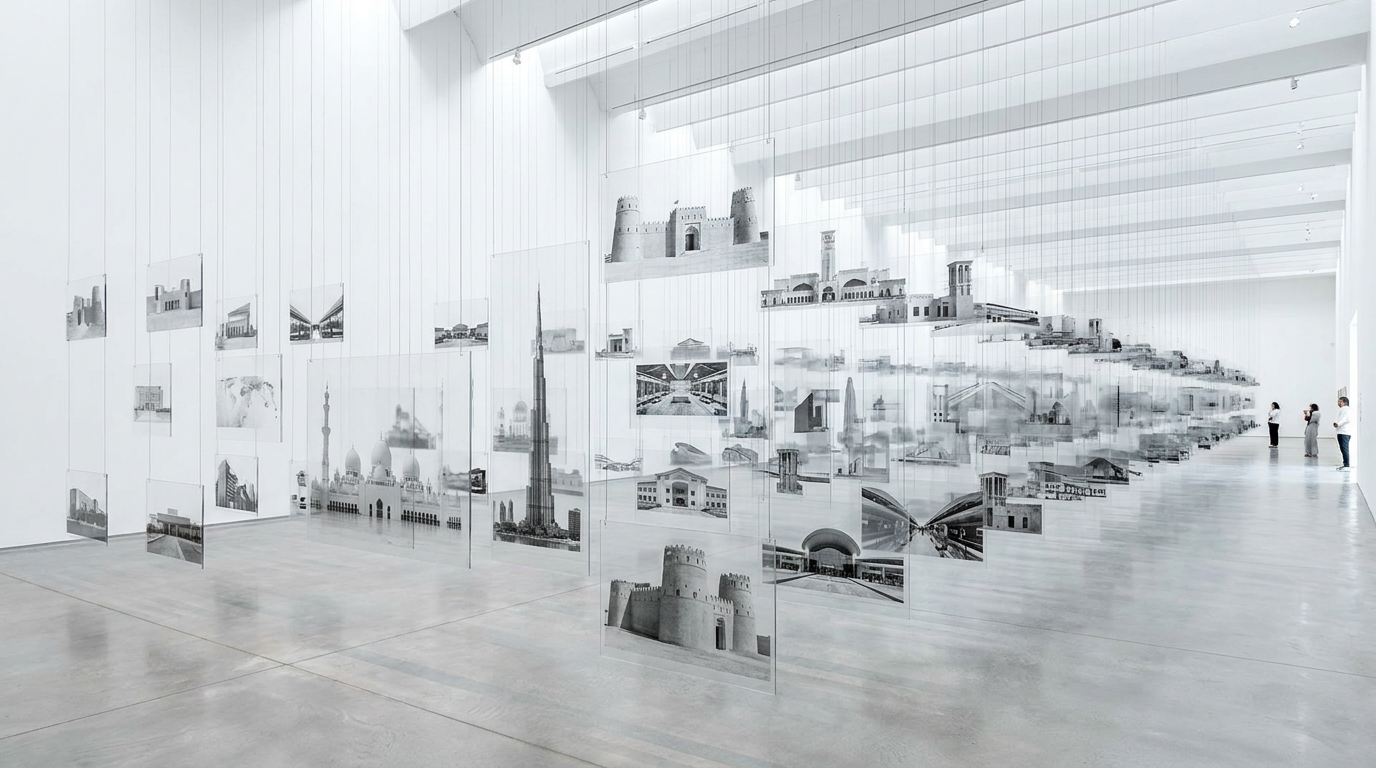
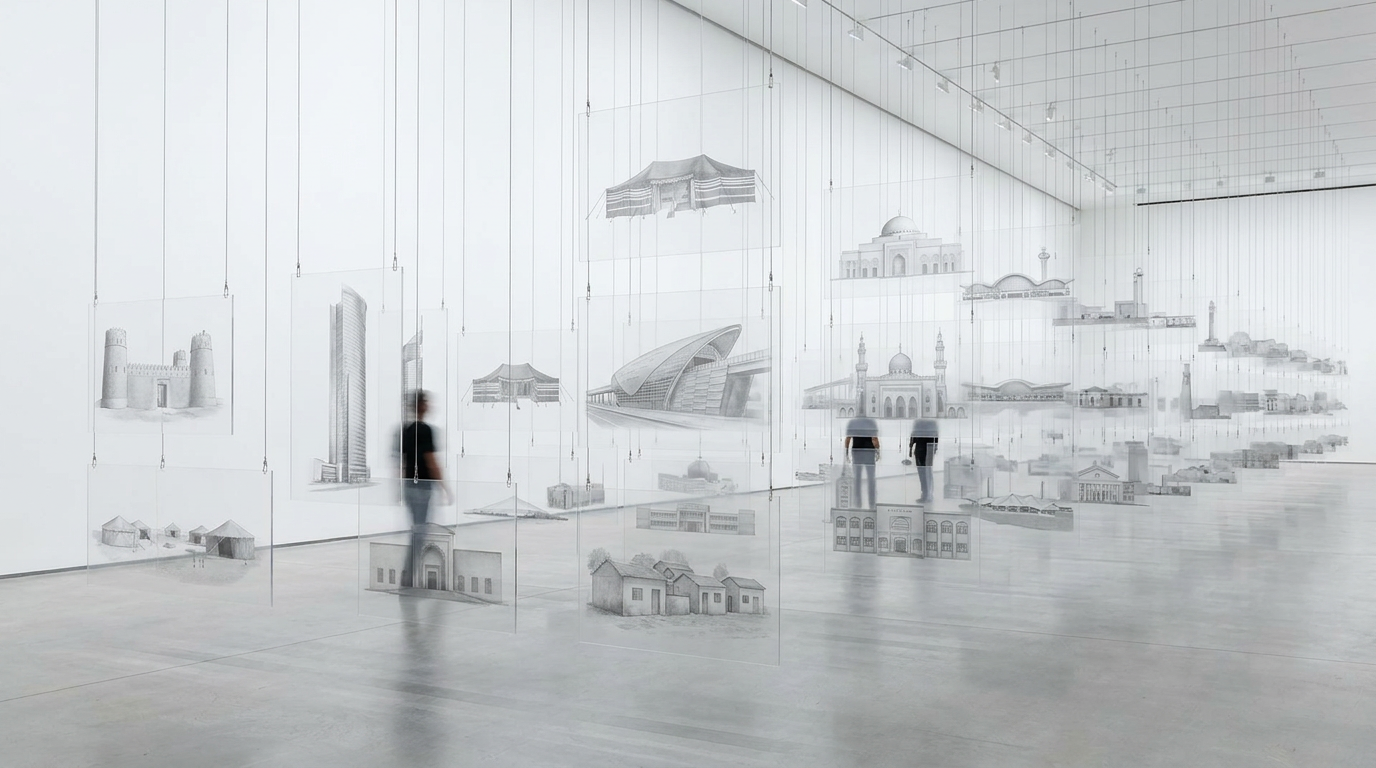
Try it below. Click any sheet, or any witness, to pull that perception to the front.
In the installation, every frame carries an invisible tag and the rails read every move, the AI records which perceptions the public brings forward and which it pushes into the depth, cycle after cycle, for the life of the exhibition. This page works the same way: it is the artwork's mechanic, at 1:100 scale.
To rearrange the room is to decide whose perception leads.
A fixed number of visitors wait at the threshold. The room admits one cycle at a time. Anticipation is part of the piece.
You cross. One hundred layered perceptions resolve into a single scene in front of you.
Pull one perception forward, push another back. Which reality leads is now your decision, exactly as it is in every shared space on earth.
The configuration you leave behind is recorded, and inherited — changed — by the next group. No two cycles ever see the same room.
100 sheets allow more possible rooms than there are atoms in the observable universe.
In this room, depth is time.
The front rails hold the present. The deepest rails hold rooms that no longer exist, the areesh house, the courtyard, the barjeel, reconstructed from elders' spoken memory alone.
Standing at the threshold, you look through today's rooms into rooms that vanished decades ago. And when a visitor pulls a grandmother's memory forward, the present is led, for a moment, by a space that no longer exists.
Every sheet knows where it stands.
Each frame carries an invisible tag; the rails read every move. The AI records which perceptions rise and which recede, cycle after cycle, for the life of the exhibition. The visitors think they're playing. They're actually the experiment.
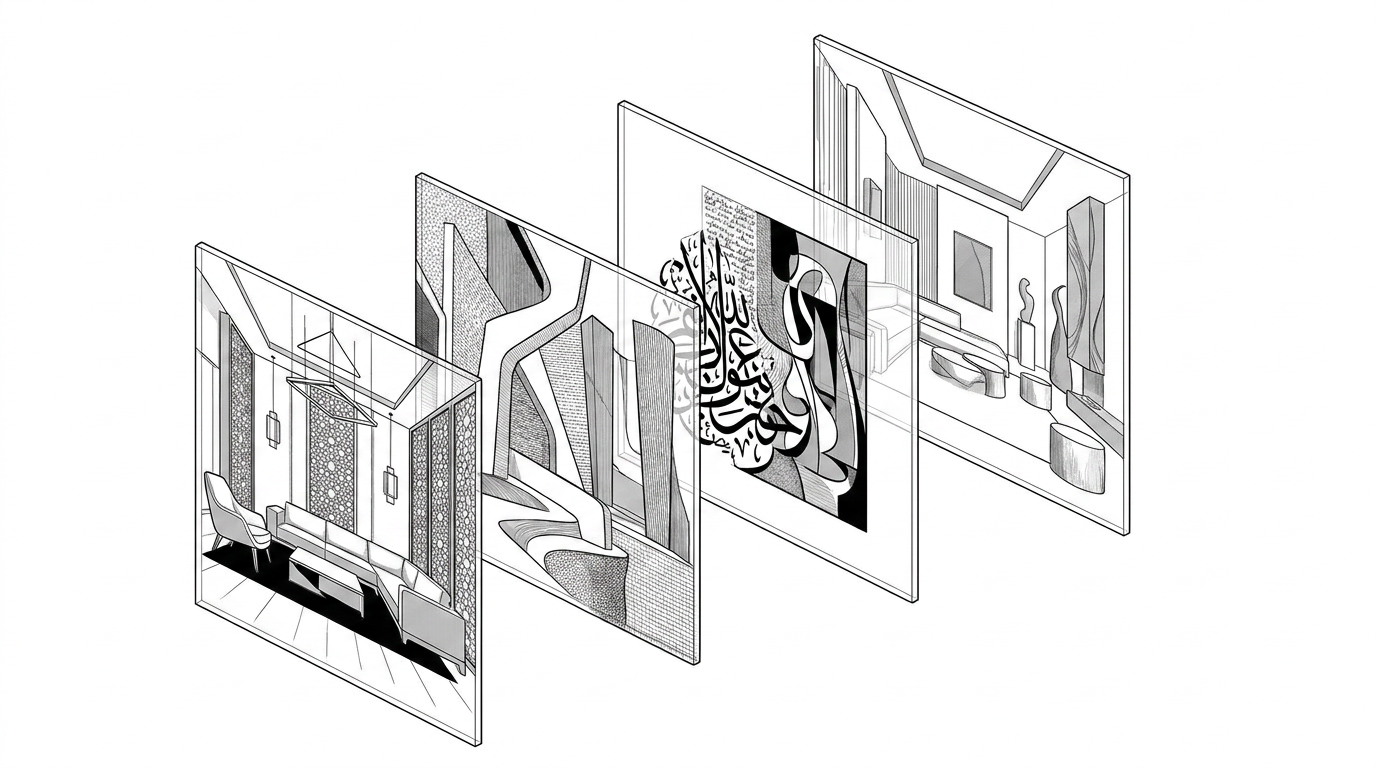
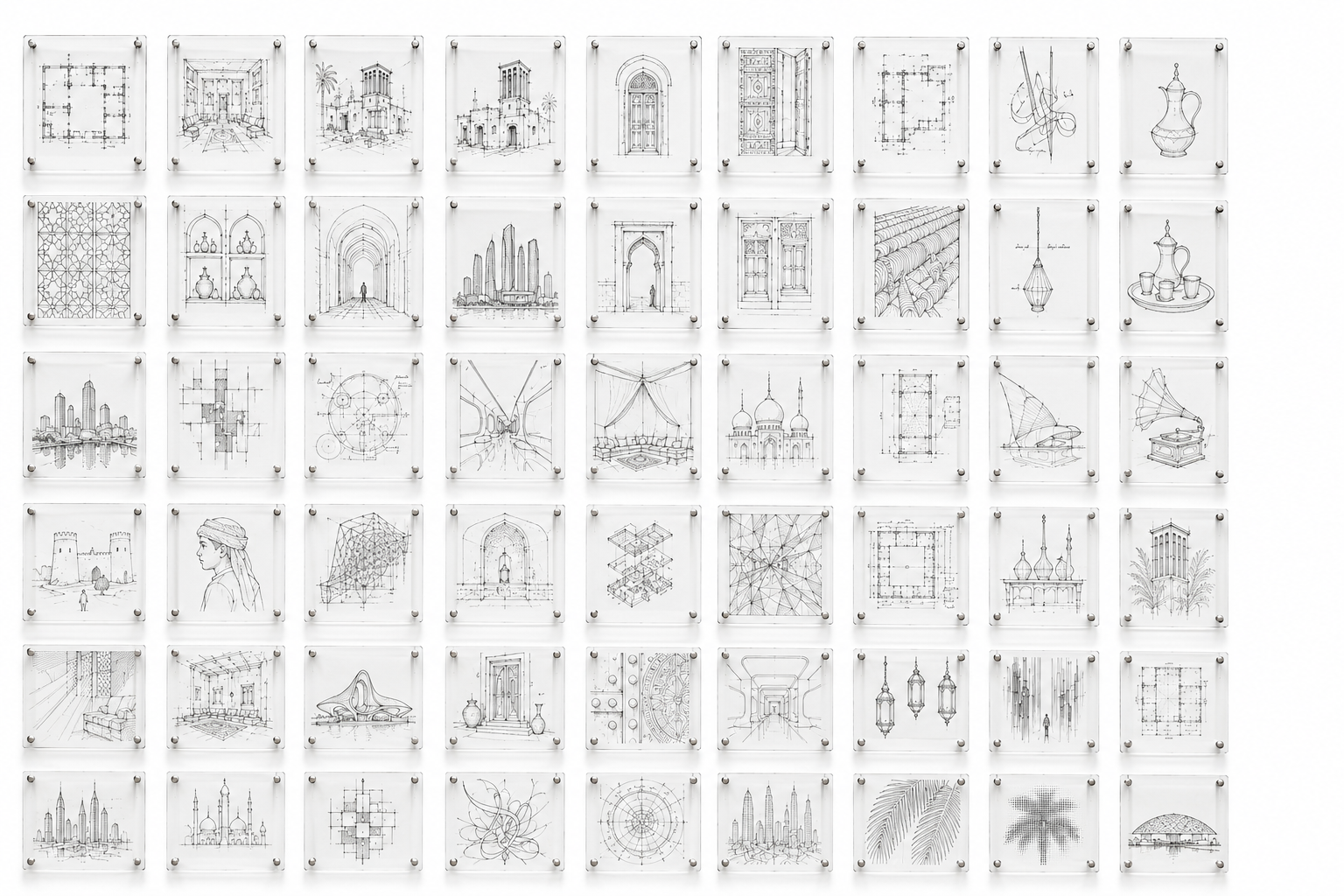
Four objects. One discipline.
What we observe, and what we refuse to.
The project studies perception. It never records behaviour without consent.
Informed consent, in the participant's own language.
Anonymity by default; identity shared only by choice.
Reconstructions generated from testimony alone — no cameras, no tracking, no surveillance.
Every archive entry is removable. Withdrawal honoured at any time.
From pilot to premiere.
12 testimonies, elders included. First sheets printed. First divergence map.
Framework, pilot sheets and installation proposal delivered.
Shortlist residency. Methodology refined with AI researchers.
Rails fabricated. 100 testimonies collected, printed, tagged. Archive live.
The Hundred Rooms opens, and begins to record.
The final stage of the project is its permanent archive.
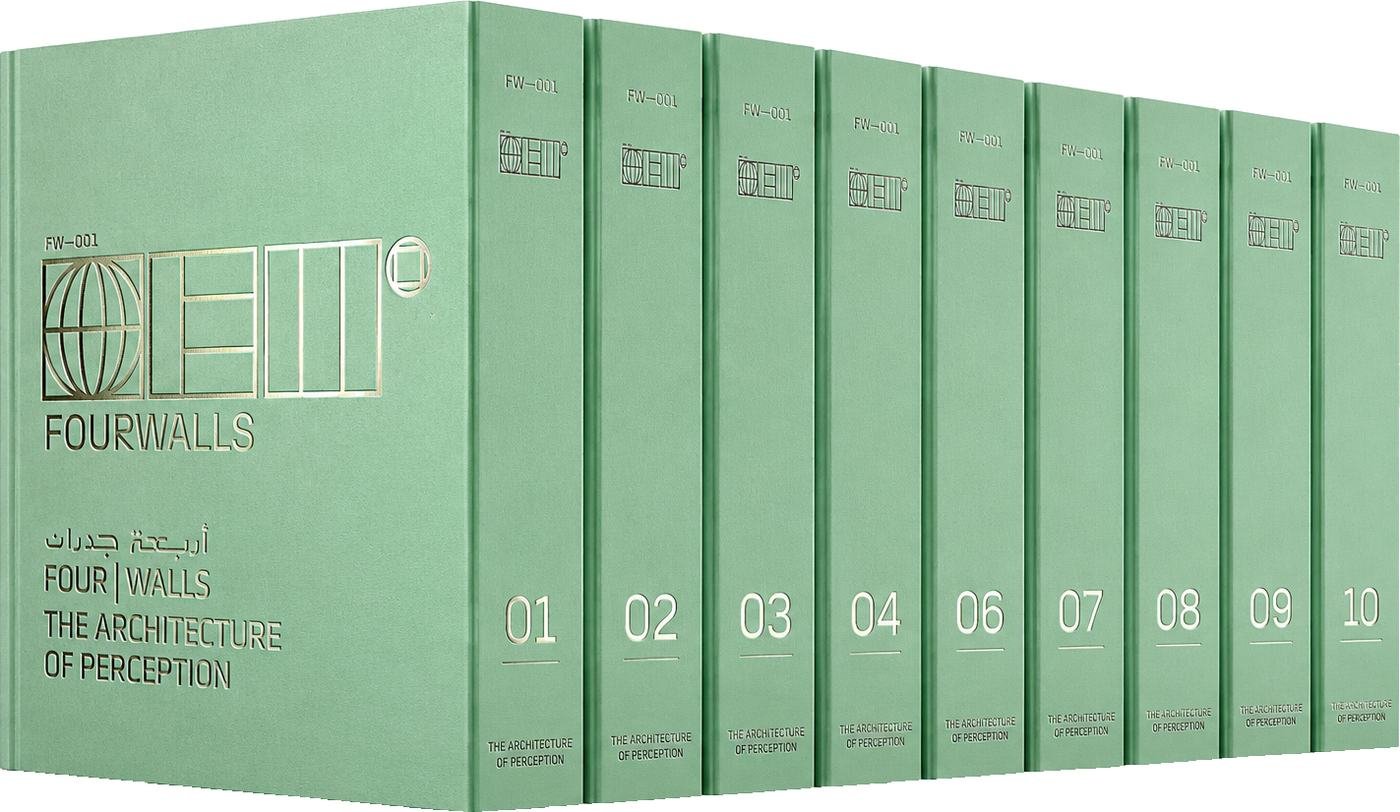
Every investigation, observation, experiment, drawing, interview, AI analysis, and visitor interaction will be documented as part of an evolving series of research books.
Rather than a single publication, these volumes become a living record of the project's continued exploration, preserving each chapter of The Architecture of Perception as it grows across new spaces, cultures, and generations.